The soft glow of the crystal chandeliers illuminated the dining room of Le Petit Miroir, a restaurant where the elite gathered to be seen. Well-dressed patrons spoke in muted tones over plates of white truffle risotto and expensive champagne.
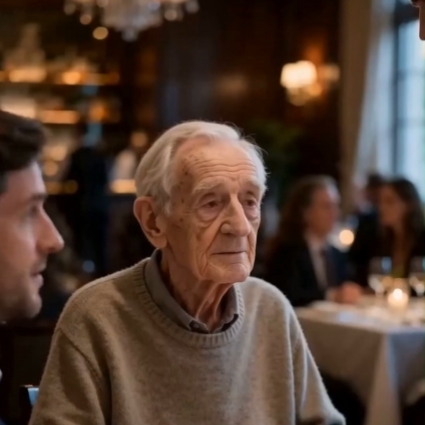
Sitting alone at a corner table was an elderly man named Arthur Pendelton. He wore a faded, slightly oversized gray knit sweater that looked like it had survived a dozen winters. His hands, thin and heavily lined with age, held the large leather-bound menu as he quietly studied the options. To anyone looking from a distance, he seemed like an old man who had scrimped and saved his pennies just to afford a single, decent meal.
The restaurant manager, a tall man in a flawlessly pressed tuxedo and a sharp black tie, had been watching Arthur with growing irritation. To him, the restaurant’s image was everything, and an old man in a worn-out sweater didn’t fit the brand.
Stepping quickly to the table, the manager snatched the menu right out of Arthur’s hands. “I’m sorry, but you’ll have to leave,” the manager said loudly, leaning down to stare into the old man’s eyes. His voice carried an arrogant sneer. “You’re not the type of customer we want here.”
Arthur didn’t flinch. He sat in silence, looking up at the manager with a calm, unbothered expression. He didn’t raise his voice, nor did he argue.

Before the manager could call for security, the heavy double doors of the restaurant burst open. The quiet atmosphere of the dining room shattered instantly. A wave of camera crews, reporters with microphones, and blinding studio lights flooded into the room, sweeping past the tables and heading straight for the corner booth.
“Over here! Sir!” a female reporter shouted, rushing past the stunned manager and holding a microphone directly toward Arthur. Bright flashes lit up the old man’s weathered face. “Sir, you’ve just been named the winner of the multi-billion dollar Global Philanthropy Award for funding hospitals and schools worldwide!”
The manager froze, the stolen menu still clutched in his hands. His jaw dropped in absolute shock, his eyes widening as the realization hit him like a physical blow.
Arthur Pendelton wasn’t a man struggling to pay for a meal. He was a reclusive billionaire who chose to live a quiet, unassuming life, spending his vast fortune to build futures for millions of children across the globe. He wore the simple gray sweater because he cared about people, not designer labels.
As the cameras flashed and reporters clamored for a statement, Arthur ignored the crowd for a moment. He looked back up at the paralyzed manager, a small, knowing smile wrinkling the corners of his eyes.
“I believe,” Arthur said softly over the noise of the crowd, “I will be staying for dinner after all.”