A Completely Normal Plan
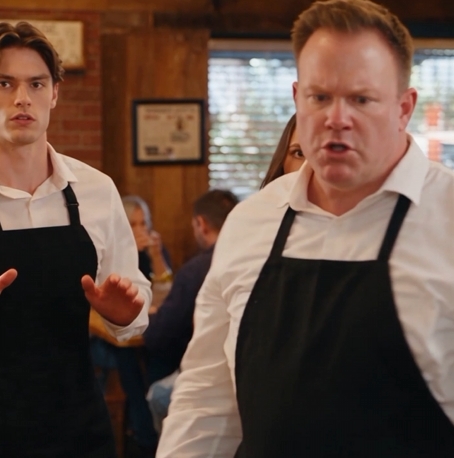
Rachel believed the plan at the busy Italian restaurant was simple enough to survive one afternoon. That confidence lasted approximately seven minutes. Tom arrived prepared, cheerful, and carrying several objects nobody had requested. The instructions were read aloud, misunderstood, read again, and then placed somewhere nobody could find them. At first, the confusion seemed harmless. A chair was moved to the wrong corner, somebody answered a question meant for someone else, and a perfectly sensible schedule acquired three extra lunch breaks. Rachel tried to restore order with a notebook, but every new note created another question. Still, everyone was laughing, and the project moved forward with the unstoppable energy of people who had no idea what they were doing.
The First Warning Sign
The first true warning sign involved matching flower arrangements and identical last names. Tom insisted that everything was under control, which was impressive because nothing nearby supported that statement. A helpful stranger offered advice, only to become part of the confusion within seconds. Someone opened the wrong door. Someone else applauded, believing the mistake was intentional. Rachel looked around the busy Italian restaurant for the responsible adult and slowly realized that everyone else was doing the same thing. The situation was not dangerous, merely spectacularly inconvenient. Instead of stopping, the group made a democratic decision to continue, mostly because nobody wanted to admit who had started the problem. That choice guaranteed the afternoon would become family history.
A Solution Makes It Worse
Rachel proposed a practical solution involving labels, a timer, and one clear leader. Within minutes, the labels were attached to the wrong items, the timer rang during an unrelated conversation, and three people believed they were the leader. Tom responded with a second plan containing more enthusiasm than logic. It might have worked if the room had been twice as large and gravity had taken the afternoon off. Instead, a harmless chain reaction traveled across the busy Italian restaurant. Cups moved, coats changed owners, and a decorative object achieved a brief but memorable flight. Nobody was hurt. Several people were embarrassed. One child described it as the best educational experience of the year.
The Audience Gets Involved
By now, spectators had gathered. Some offered assistance, while others quietly took out their phones because they recognized a story worth remembering. Rachel attempted to explain the original goal, but the explanation sounded less believable each time it was repeated. Tom greeted the audience like a performer and assigned volunteer roles without permission. Surprisingly, people accepted them. An elderly woman became timekeeper. Two teenagers managed supplies. A man who had only stopped to ask for directions was placed in charge of refreshments. The busy Italian restaurant developed the cheerful atmosphere of a festival organized by accident. Every new helper reduced one problem and created a funnier one, yet the crowd’s confidence continued to grow.
The Moment of Maximum Confusion
The peak arrived when three unrelated events happened at once. The missing item reappeared in an impossible location, music began playing from a device nobody recognized, and Tom announced victory several minutes too early. Rachel tried to speak, laughed instead, and finally surrendered to the absurdity. The crowd followed. For a full minute, the busy Italian restaurant was filled with the kind of laughter that makes people lean against walls and forget why they were worried. Even the person responsible for the biggest mistake stepped forward and bowed. That pause changed everything. Once nobody felt embarrassed, they could examine the situation clearly and discover that the disaster was mostly appearance, noise, and excellent timing.
The Unexpected Expert
Help came from the least expected person. A quiet visitor who had watched from the edge of the group recognized the central problem and offered one calm instruction. The solution required no special equipment, only moving one object and asking the right question. Rachel stared at the result, then at Tom, who immediately claimed to have been testing everyone. Nobody believed this, including Tom. The expert was rewarded with applause and the last untouched pastry. Order returned in small pieces. Supplies were recovered, names matched their correct owners, and the original schedule emerged from beneath a jacket. The crowd remained, however, because leaving now would mean missing the ending.
A Surprise Hidden in the Mix-Up
As the group cleaned up, Rachel discovered that the confusion had produced one genuinely wonderful result. People who normally passed without speaking had worked together. Two neighbors learned they shared a hobby. A shy child had made the announcement everyone needed. Someone searching for an opportunity found exactly the right contact. Tom pointed out these successes with the confidence of a person presenting an intentional strategy. The claim earned another round of laughter, but it also contained truth. The mistake had opened conversations that careful planning might never have created. The busy Italian restaurant no longer felt like a room of strangers; it felt like a team with a very unusual origin story.
The Second Twist
Then came the second surprise: both families discovered they had once been neighbors. For several seconds, Rachel assumed this was another misunderstanding. It was not. The announcement transformed the day from a private comedy into something the wider community could celebrate. People volunteered before anyone asked. A donation jar appeared. Someone designed a poster on the back of the original failed schedule. Tom, delighted by the turn of events, attempted a speech and forgot the point halfway through. The unfinished speech received the loudest applause of the afternoon. What began as an error had become a tradition in the making, complete with witnesses, refreshments, and at least four conflicting versions of what had actually happened.
Cleaning Up the Evidence
Cleanup required another hour because every object inspired a retelling. Rachel found a spoon in a coat pocket, a name tag on a lamp, and the missing pen exactly where it had been placed for safekeeping. Tom created a box labeled “important,” then immediately forgot what belonged inside it. Volunteers sorted the remaining items while exchanging jokes and phone numbers. Nothing valuable had been lost, although one person went home with a hat that improved his appearance considerably. The busy Italian restaurant gradually returned to normal, but nobody wanted it to look completely untouched. They left one harmless reminder in view so future visitors would ask about the day everything went wrong correctly.
The Story Spreads
By the next morning, the story had traveled through the neighborhood. Each retelling added a detail. The object had flown higher, the crowd had doubled, and Tom had supposedly delivered a ten-minute speech in perfect rhyme. Rachel tried correcting the exaggerations before realizing they made everyone happier. People visited the busy Italian restaurant to see the famous location and contributed their own memories of plans that had failed magnificently. A noticeboard was created for these stories. Within a week it was full. The original mishap gave people permission to laugh at themselves, and that made the community feel warmer, more forgiving, and considerably more entertaining.
An Annual Tradition
Someone suggested repeating the event the following year, this time on purpose. Rachel objected that intentionally recreating an accident was logically impossible. Tom responded by forming a planning committee, which met twice and accomplished mainly the selection of snacks. Nevertheless, the tradition took shape. Rules were written to encourage creativity and prevent the most inconvenient parts of the original confusion. The unexpected expert was invited as honorary supervisor. Children designed awards for best recovery, funniest mistake, and most confident incorrect instruction. The community discovered that celebration did not require perfection. Sometimes it required a flexible schedule, a patient audience, and one person willing to laugh first.
Why Everyone Still Laughs
Months later, Rachel and Tom returned to the busy Italian restaurant and found a photograph from that day displayed near the entrance. Nobody in the picture looked organized. Everyone looked happy. Rachel admitted that the original plan had failed in almost every measurable way, yet the outcome had succeeded beyond expectation. New friendships remained, the community project continued, and the annual event already had more volunteers than jobs. Tom still claimed partial credit, usually while changing the subject before questions became specific. Whenever the story was told, the laughter arrived at the same moment. It reminded everyone that a good life is not one without mistakes, but one with people who help turn mistakes into memories.