What happens in the video
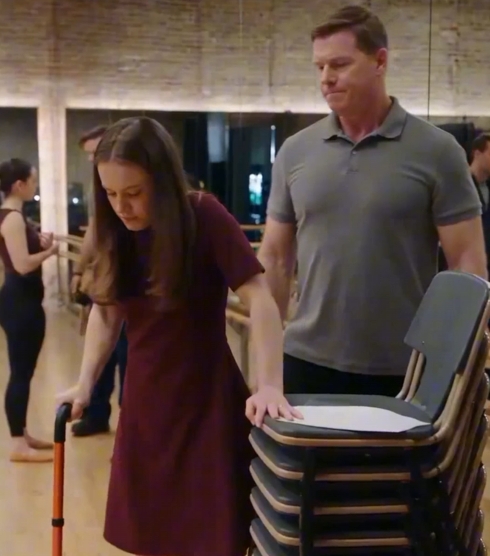
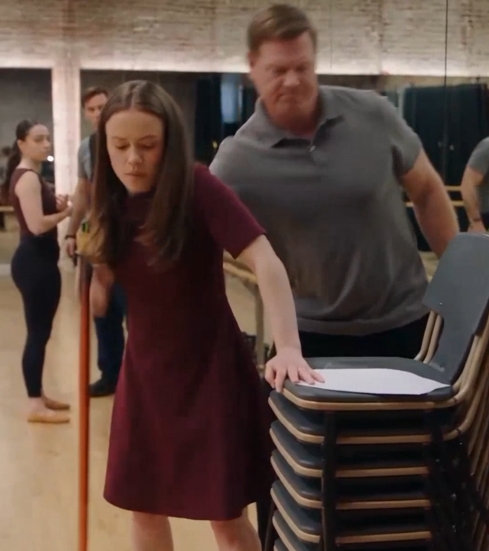
In a hall, a woman in a burgundy dress stands beside stacked chairs, using an orange walking stick and holding papers. A man in a grey polo shirt takes the stick, raises it, and places it beside the chairs as she bends forward. They argue while people watch. A suited man approaches and retrieves the stick near the end.
Continuation:
Megan had chosen the hall because she knew the layout.
There was level access, somewhere to sit, and enough space to move without being crowded. After months of uncertainty about attending events, she had finally agreed to help with the community fundraiser.
Her job was simple: welcome guests and check names against the list.
She was reviewing the papers when the organiser approached the stack of chairs.
“You’ll need to move.”
“Of course. Give me a moment.”
Before she could reposition herself, he took her walking stick.
Megan bent forward, reaching towards the chairs to steady herself.
“Give that back.”
He placed it out of her immediate reach.
“You can manage two steps.”
The room seemed to go quiet around her.
Megan had heard versions of that sentence before. She was young. She could sometimes walk without support. People saw one good moment and assumed they understood all the difficult ones.
But nobody had taken her stick before.
“You don’t get to decide that,” she said.
He began explaining how busy he was and how the chairs needed moving.
Megan held the edge of the stack.
“I asked for my walking stick.”
A trustee who had been speaking with guests crossed the hall. He retrieved it and offered it back without pulling Megan or touching her.
“Would you like a chair?”
“Yes.”
Once she was seated, he asked her what had happened. He listened to her answer before speaking with the organiser.
The organiser called it a joke.
Megan shook her head.
“I wasn’t laughing. I was trying not to fall.”
He was removed from that evening’s duties while the incident was reviewed. The fundraiser continued, but Megan was given the choice to stay, leave, or take a different role.
She went home.
That decision upset her more than she expected. She had wanted to enjoy the evening, and now it felt as though somebody else’s behaviour had chosen the ending for her.
A few days later, the trustee visited with another volunteer.
They didn’t bring a speech about how brave she was.
They brought the event plans and asked what needed changing.
Megan pointed to the blocked routes, the missing seating, and the assumption that volunteers would stand all evening.
Then she agreed to help with the next event—provided those changes happened first.
Months later, she returned to the hall.
The chairs were arranged. The routes were clear. Someone had placed a seat beside the welcome desk.
Megan rested her stick within reach and opened the guest list.
This time, she stayed until the last person left.