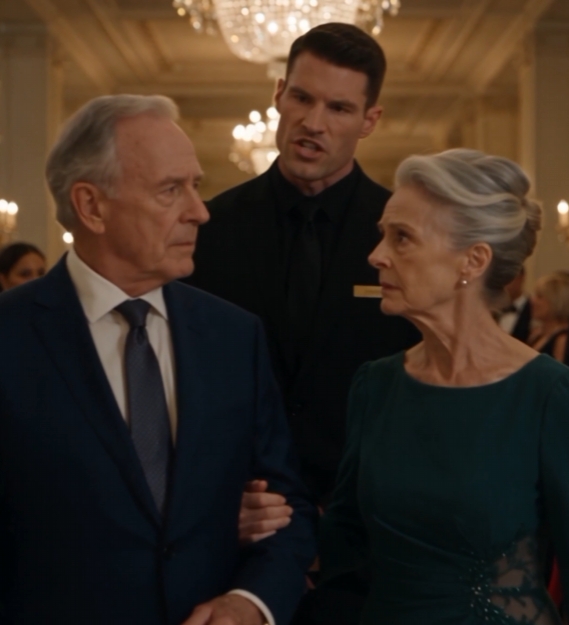
In a warehouse aisle, a younger employee stands with his hand on his hip, facing an elderly man holding a folder. The onscreen captions show him saying, “Wait until someone collects you.”
A professionally dressed woman approaches and greets the visitor: “Mr. Parker. Ready?” She explains that the review team is waiting and that he is leading the independent assessment.
Mr. Parker opens his folder. The final caption reads: “We can start with communication.”
Extended story — imagined continuation
The younger employee, Daniel, straightened immediately.
“I didn’t realize you were the assessor.”
Mr. Parker paused with his pen above the page.
“Would you have answered differently?”
Daniel glanced toward the woman beside them. “Of course. I mean—I would have explained properly.”
“Then explain properly to the next visitor, too.”
Daniel expected the meeting to continue without him. Instead, Parker asked him to join them.
Inside the conference room, reports covered the table: missed dispatches, repeated complaints, staff departures. Daniel had explanations for all of them. Tight deadlines. New employees. People who didn’t follow instructions.
Parker listened, then asked a different question.
“When was the last time someone on your team told you that you were wrong?”
Daniel almost answered immediately. Then he stopped.
He couldn’t remember.
Later, during a walk around the warehouse, a young worker approached with a delivery sheet. Daniel instinctively raised his hand.
“Not now.”
Parker said nothing.
Daniel noticed the silence.
He lowered his hand. “Sorry. What did you need?”
The worker showed him two nearly identical order numbers. A shipment was about to leave for the wrong customer. She had spotted the mistake while checking the labels.
Daniel looked toward the loading area.
“Hold that dispatch,” he called.
For the first time that morning, his urgency helped someone instead of silencing them.
At the end of the assessment, he waited outside the office.
“Have you recommended replacing me?”
“I’ve recommended changes,” Parker replied. “Some of them depend on you.”
The following morning, Daniel gathered his team before the shift began.
“I’ve made it difficult to bring problems to me,” he said. “Yesterday proved that. I’m sorry.”
Nobody applauded. A few people exchanged doubtful looks.
He had expected that.
“Who has something I need to hear?”
After a long pause, a woman at the back raised her hand.
Daniel put down his clipboard and listened.
End of Story.\