What happens in the video
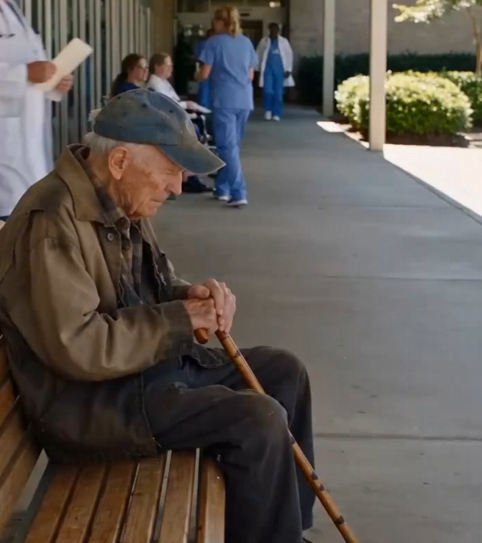
An elderly man wearing a cap sits on a bench outside a medical building, holding a walking stick. A uniformed security employee approaches and gestures towards him. The older man gets up, and they continue speaking. A nurse comes outside and joins the exchange near the end. The clip does not establish why he is waiting there.
Continuation:
George knew the bench by the crack in the second wooden slat.
He had sat there during his wife’s appointments for years, holding her handbag whenever she insisted she didn’t need it and then asking for it five minutes later.
Now she was inside for a longer stay. He had arrived early for visiting hours and settled in the familiar place to wait.
The security employee saw an older man with a bag who seemed to have been there a long time. He asked whether George needed to leave.
“I’m waiting for my wife.”
“Visitors should check in at reception.”
“I have. They told me to wait until two.”
The employee continued questioning him, apparently unconvinced. George stood because the conversation felt awkward with someone leaning over him, but standing made his knees hurt.
He gripped his stick and repeated the name of the ward.
A nurse emerging from the building recognised him. She checked the situation, then explained that George had been directed to wait outside while his wife rested.
The guard apologised. George nodded but asked to sit down again before discussing anything else.
The nurse stayed for a moment. She had news: his wife was comfortable and looking forward to seeing him. That mattered more than the disagreement.
When he entered the ward, she asked whether he had remembered the crossword.
George produced it from his coat.
“You’ve done the easy clues,” she accused.
“I left you the interesting ones.”
They spent most of the visit arguing affectionately about an answer neither could spell. For an hour, the hospital felt less frightening.
Later, George mentioned the bench incident to the nurse. She arranged for clearer information about waiting areas and ensured he knew where to ask if plans changed.
He didn’t want special treatment or a dramatic apology in front of strangers. He wanted the answer he had already given to be checked rather than dismissed.
On his next visit, the security employee greeted him by name and asked whether he needed directions. George said he knew the way, then asked how the man’s shift was going.
A week later, his wife was ready to go home. They paused by the bench while transport was arranged.
She noticed the crack in the wooden slat.
“Still not fixed.”
“Some things remain dependable,” George said.
She took his hand, and they waited together.