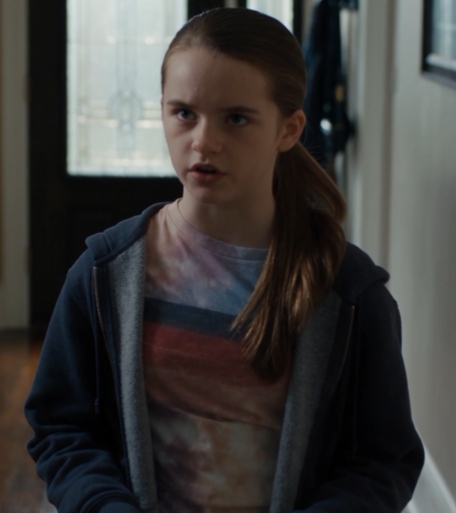
Lucy arrived at her father’s house carrying an envelope.
Inside was a school photograph of a boy about her age.
She placed it in front of him.
“Who is he?”
Her father’s wife, Nadia, moved closer.
“Where did you get that?”
“Gran’s address book.”
Her father sat down.
The boy had his eyes.
Lucy had noticed immediately. Now she watched him search for an explanation that wouldn’t hurt her.
“His name is Adam.”
“Is he your son?”
“Yes.”
Lucy looked at Nadia.
“Did you know?”
“Yes.”
That answer hurt differently.
Her father explained that Adam lived with his mother in another town. Contact had been inconsistent. The adults had disagreed, then delayed, then allowed the silence to become routine.
“You come to all my school things,” Lucy said.
Her father lowered his head.
“Does he think you’re too busy?”
Nobody answered.
Lucy pushed the photograph back across the table.
“You need to tell him about me.”
“I will.”
“Don’t say that because you want me to stop being angry.”
A week later, her father showed her the message he had sent.
He hadn’t blamed Adam’s mother. He hadn’t claimed he had done his best.
He had asked whether Adam would be willing to speak.
The reply took eleven days.
Adam wanted to meet Lucy.
He wasn’t ready to meet their father.
They arranged to see each other at a café. Nadia drove Lucy and waited nearby.
Adam arrived with the same guarded expression Lucy had seen in the mirror all morning.
For ten minutes, they discussed school.
Then he pointed at her drink.
“You hate coffee too?”
“It smells better than it tastes.”
He grinned.
“Exactly.”
When Lucy returned to the car, her father had sent a message asking how it went.
She replied:
Good. I’m seeing him again.
Then, after a moment:
The rest is yours to fix.
End of Narrative.