The boy placed a broken phone on the counter.
“Could you fix it enough to make one call?”
My manager didn’t touch it.
“The screen alone costs more than that phone is worth.”
The boy opened his hand. A few coins and a folded five-dollar bill lay in his palm.
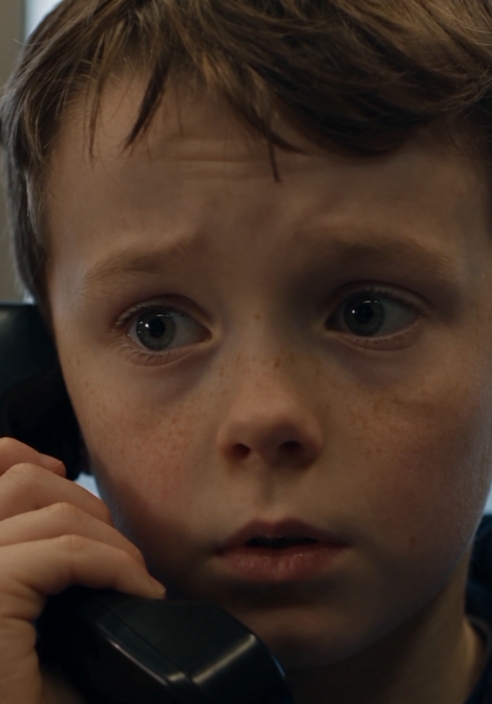
“I don’t need the screen. Just the call.”
Behind him, rain blew through the open door. His jacket was wet at the shoulders, and one of his shoes had been repaired with silver tape.
“What number?” I asked.
He took a paper from his pocket and carefully unfolded it.
There were seven digits written in faded blue ink.
Our area code was missing.
So was any explanation.
“My grandmother says he’ll know what to do.”
My manager, Scott, sighed.
“We’re a repair shop, Anna. Not a telephone exchange.”
The boy began gathering his money.
I reached for the shop phone.
“We can try.”
—
His name was Owen. He was eleven.
His grandmother was waiting at a laundromat two doors away, where the owner had let them sit out of the rain.
“She doesn’t know I came here,” he admitted.
“Does she know where you are?”
“I told her I was asking about the phone.”
I added our local area code and dialed.
A recorded message told me the number was no longer in service.
Owen watched my face.
“Try again.”
I did.
The same message answered.
He looked down at the paper.
“She said he always picked up.”
“How long has she had this number?”
“I don’t know.”
Scott came around the counter.
“Well, we’ve tried. You need to go back to your grandmother.”
Owen didn’t move.
Then he asked the question that made me put the receiver down.
“If someone dies, do they turn off their number?”
A chair scraped behind us.
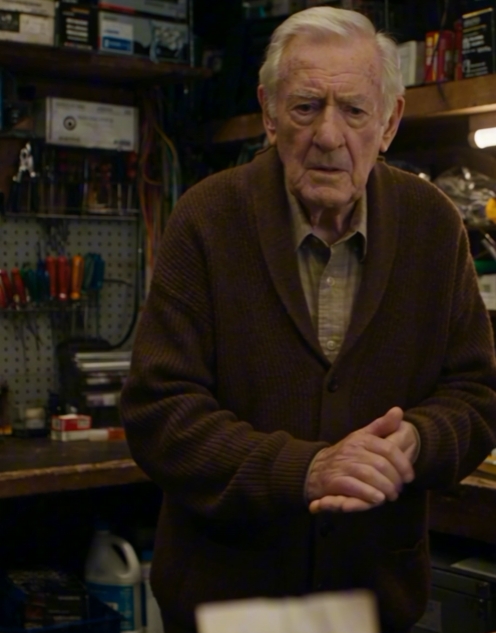
Mr. Ellis, the elderly technician who rented our back workshop, stood in the doorway.
He had been repairing radios there since before I was born. Most customers assumed Scott owned the whole place.
Scott usually let them.
“Let me see that paper,” Mr. Ellis said.
Owen handed it over.
The old man read the number.
Then he turned the paper toward the light.
“Who wrote this?”
“My grandmother.”
“What’s her name?”
“Ruth.”
Mr. Ellis gripped the edge of the counter.
“Ruth what?”
“Bell.”
For several seconds, I thought he hadn’t heard.
Then he quietly said, “That was my number.”
—
Scott gave an awkward laugh.
“Well. Mystery solved.”
Mr. Ellis didn’t look at him.
“Where is she?”
Owen pointed toward the window.
The old man took his coat off its hook.
Scott stepped aside, irritated.
“You’ve got three repairs waiting.”
“They’ll wait.”
I told Scott I was taking my break and followed them.
Inside the laundromat, a woman sat between two large bags. A wheeled suitcase stood beside her knees.
She rose when she saw Owen.
“There you are. I was about to—”
Then she saw Mr. Ellis.
Her sentence stopped.
“Arthur?”
He stood just inside the entrance.
“You still have my old number.”
Ruth looked at the paper in his hand.
“You said to keep it.”
“That was thirty years ago.”
“I didn’t know it had an expiration date.”
He laughed once.
Then his eyes filled.
They had been friends long before either of them had grandchildren. Ruth ran a small appliance shop. Arthur repaired what she sold. According to her, he was brilliant with machines and hopeless with customers.
According to him, she charged too little and gave everyone too much time.
They had lost touch after Ruth moved away to care for her mother.
There had been calls at first. Christmas cards. Then a changed address, an unanswered letter, and years that went faster than either expected.
Arthur glanced at the suitcases.
“Are you visiting?”
Ruth’s expression tightened.
“Not exactly.”
—
A pipe had burst in the building where Ruth and Owen lived.
The ceiling over their kitchen had collapsed while they were out buying groceries. Emergency workers told the residents they couldn’t stay until the building had been inspected.
Ruth had packed two bags.
Her phone had slipped from her hand on the wet stairs.
Owen’s mother was working aboard a passenger ferry, where she wouldn’t receive messages until it docked that evening.
“We were going to find a hotel,” Ruth said.
“Which one?” Arthur asked.
She didn’t answer.
Owen looked at her.
“The first one wanted a card.”
“Owen.”
“The second one cost too much.”
Ruth sat down slowly.
Arthur pulled a chair beside her.
“You could have called the council’s emergency number.”
“I was trying to.”
“With this?”
He held up the broken phone.
She gave him a tired look.
“I’ve had a difficult afternoon, Arthur.”
He nodded.
“I can see that.”
For a moment, nobody spoke.
Then Owen said, “She remembered your number without looking at the paper.”
Arthur looked at Ruth.
She stared at her hands.
“I didn’t know anyone else in town.”
He sat beside her a little longer.
Then he said, “Come back to the workshop. We’ll get you warm and work out the next thing.”
—
Scott was on the phone when we returned.
He covered the receiver as he saw the bags.
“No. Absolutely not.”
Arthur stopped.
“They’re waiting in my workshop.”
“We have customers.”
“So do I.”
“You can’t turn the place into a shelter.”
Ruth reached for Owen’s hand.
“We don’t need to stay.”
Arthur opened the back door for her.
“Yes,” he said. “You do.”
Scott ended his call.
“I manage this business.”
Arthur faced him.
“You manage the retail counter. I own the building, and I’m using my room.”
There was no dramatic announcement after that.
Just a long silence while Scott realized there was nothing left to argue about.
I made tea.
Arthur found a phone charger, a blanket, and the emergency housing number. I called while he examined Ruth’s damaged phone beneath his work lamp.
Owen stood beside him, watching every movement.
“Can you fix it?”
“The phone? Possibly.”
“And the number?”
Arthur looked up.
“The number’s gone.”
Owen’s face fell.
Arthur pushed a stool toward him.
“But you found me.”
—
By six o’clock, we had reached Owen’s mother.
I put the call on speaker.
The moment Ruth heard her daughter’s voice, the composure she had held all afternoon gave way.
“I’ve got him,” she said. “He’s all right.”
Owen leaned toward the phone.
“Gran’s all right too. We found her friend.”
His mother asked us to stay together until she could reach them. The emergency housing team arranged a room for that night.
Arthur wrote down the address, checked the route, and offered to drive.
Then he opened a drawer and took out a small envelope.
Inside was an old photograph.
Ruth stood outside her appliance shop, one hand on a washing machine displayed on the pavement. Arthur stood beside her, holding a toolbox.
Between them was a little girl wearing a yellow raincoat.
“My mum?” Owen asked.
Ruth nodded.
Arthur turned the photograph over.
There, in Ruth’s handwriting, was the same telephone number.
“Your grandmother used to write it on everything,” he told Owen. “People bought a toaster and went home with my number.”
“Because you could fix them,” Ruth said.
“Because you sold them a toaster older than they were.”
She laughed.
It was the first time Owen stopped watching her anxiously.
He climbed onto the stool and asked Arthur what was wrong with the radio on his bench.
Arthur began explaining.
Ruth held her tea with both hands and listened.
—
Three weeks later, Ruth came back to collect her repaired phone.
Owen came with her.
Their apartment still needed work, but they were staying somewhere dry, and his mother had arranged leave from her job.
Scott was behind the counter.
This time, he said good morning and offered Ruth a chair.
She accepted.
Arthur brought out the phone.
“How much?” she asked.
“Twenty-five.”
“That’s too little.”
“You still think you know my business?”
“I taught you half of it.”
She paid him thirty and refused the change.
Before leaving, Owen handed me a folded paper.
“I made copies.”
It listed his mother’s number, his grandmother’s number, and Arthur’s new one.
I smiled.
“Very organized.”
He nodded toward the old technician.
“He said the important numbers shouldn’t only live inside a phone.”
After they left, Arthur pinned his copy above the workbench.
Not beside the invoices.
Beside the photograph.
That evening, just before closing, his phone rang.
He looked at the name and answered.
“Yes, Ruth?”
A pause.
“No, you don’t need an excuse.”
He pulled out his chair and sat down.
“Tell me about your day.”