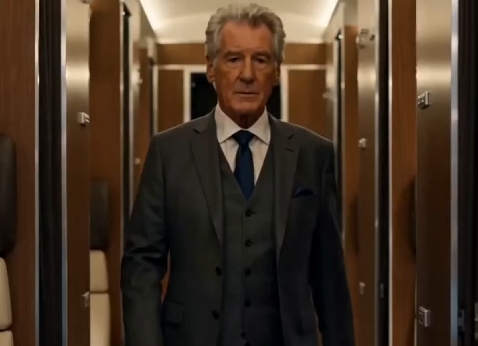
The scene begins with an air of clinical, high-end exclusivity. A man, impeccably dressed in a charcoal three-piece suit, walks down the aisle of a luxury airplane cabin. He is the picture of old-world authority. Yet, when confronted by a flight attendant and later a pilot, the narrative shifts from a standard boarding procedure into a chilling standoff. The man holds a ticket for 1A, but the crew insists he doesn’t “belong” there.
Who is the Man in Seat 1A?
To the casual observer, he looks like a captain of industry—a CEO or a high-ranking diplomat. However, his calm demeanor in the face of blatant disrespect hints at something far more potent. He is Arthur Sterling, a retired intelligence architect who spent three decades operating in the shadows of international power.
Sterling isn’t just a passenger; he is an auditor of systems—and not just airline systems. The “mistake” the flight attendant claims exists in the boarding system is, in Sterling’s eyes, a microcosm of the airline’s broader structural failure. The “policy” the pilot cites is a desperate attempt to maintain order in an organization that has clearly lost its way.
The Confrontation: A Strategic Gambit
When Sterling asks, “Is it a policy to exclude those who see the cracks in your foundation?” the cabin goes silent. He isn’t merely concerned with a seat assignment. He is testing the resolve of the airline’s management. By challenging him, they have revealed their fragility.
The ticket in his hand is a “ghost ticket”—a document issued by an anonymous benefactor, not the airline itself. It is a key meant to unlock a specific truth. Sterling knows that the aircraft, branded “Airk Carian,” is not merely transporting passengers; it is being used to move assets belonging to a shadow corporation currently under investigation by the intelligence agency Sterling once commanded.
The Continuation: The Descent into Truth
As the pilot attempts to physically escort Sterling away, the man in the charcoal suit doesn’t move. Instead, he speaks a string of numbers—a specific, encrypted sequence.
The atmosphere in the cabin shifts instantly. The pilot pales, his hand dropping from Sterling’s shoulder. The threat of removal evaporates, replaced by a sudden, frantic realization: they are not dealing with a disgruntled passenger, but with the man who wrote the very protocols that govern their corporate security.
“You have five minutes before the ground crew realizes the flight path has been altered,” Sterling says, his voice devoid of malice but dripping with finality. “The seat in 1A is no longer a privilege. It is your only chance to remain in the air, rather than falling with the cargo you’re currently hiding.”
The Unfolding Reality
The scene cuts to the cockpit, where the flight crew scrambles to access a private terminal Sterling has signaled. As they bypass the corporate firewall, they discover the truth: the plane is carrying classified data hardware, not commercial goods. The “First Class” cabin is a decoy to deflect attention from the cargo hold.
Sterling enters the cockpit, his authority absolute. He isn’t there to hijack the plane; he is there to intercept the truth. He knows that once they land, the cargo will be incinerated, the crew will be “retired,” and the trail will vanish.
The story of the man in Seat 1A is a cautionary tale about the arrogance of systems. It serves as a reminder that behind every gate, every boarding pass, and every corporate policy, there are individuals watching—and sometimes, they decide it is time to step out of the shadows. As the plane levels out at cruising altitude, Sterling sits in 1A, staring out the window at the horizon, waiting for the inevitable intercept. The game has changed, and for the first time in his career, the pilot is merely a passenger in his own aircraft.
What do you think was the specific “truth” Sterling was looking for in the cargo hold?