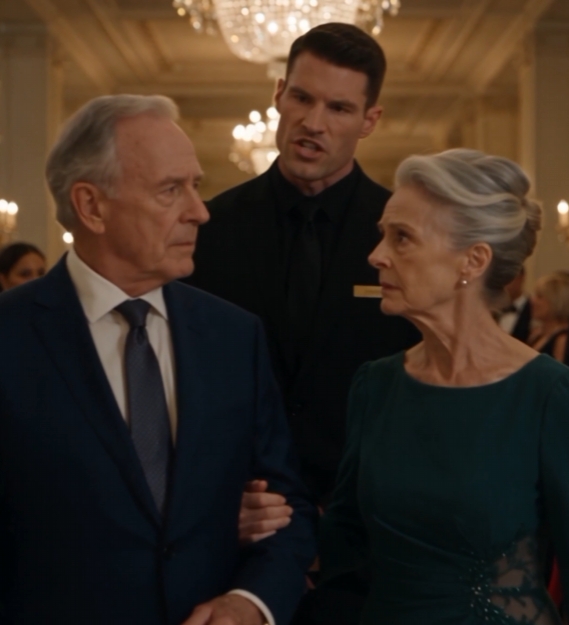
An elderly woman wearing a lilac dress and beige cardigan stands in a grand foyer, holding a small paper ticket or invitation. She speaks with a younger man in a dark suit who remains in front of her. Other guests stand nearby. Their exchange continues throughout the clip, which ends without showing whether she is admitted or why she has been stopped.
Part Two:
Margaret kept smoothing the ticket between her fingers.
Her grandson had posted it three weeks earlier, along with a note.
Front row, Gran. I want to be able to see you.
Now the usher was telling her there was a problem with her seat.
She tried to explain that she had arrived early, that she had the right date, that someone was expecting her. Behind her, other guests passed through.
For a moment, she wondered whether she had misunderstood the invitation.
Then music drifted through the auditorium doors.
She recognized the melody.
Her grandson used to practice it on an old keyboard in her kitchen, stopping every few bars to ask whether she thought he was improving.
Margaret straightened.
“Please find someone who can check.”
A senior usher came over and examined the ticket. The seat had been reassigned during a booking correction, but Margaret’s replacement reservation was waiting at the desk.
The younger usher looked embarrassed.
“I should have asked.”
“Yes,” she said softly. “You should.”
He escorted her inside just before the lights dimmed.
Onstage, her grandson searched the front row. When he saw her, his shoulders relaxed.
Before playing, he leaned toward the microphone.
“When I was twelve, someone sold her wedding jewelry to buy me my first proper instrument. She told me it was money she had saved.”
Margaret pressed a hand to her mouth.
“I found the receipt last year,” he continued. “This first piece is for her.”
The usher stood beside the auditorium door and listened to every note.