I first met Robert in the fluorescent-lit aisle of a local grocery store on a Tuesday that felt entirely unremarkable. He was 37, with kind eyes and a soft-spoken demeanor, but he looked as though he were carrying the weight of the world on his shoulders.
He was struggling to manage an overloaded shopping cart, his attention divided between his list and ten children of various ages who were clamoring for his attention. When a toddler named Sophie stretched her tiny arms toward me, Robert quickly scooped her up, offering an embarrassed, tired smile. “I’m sorry,” he said, his voice laced with exhaustion.
“She does that with anyone who smiles at her.” I found myself laughing, and when I told him I’d just keep smiling, a spark of genuine connection ignited between us.
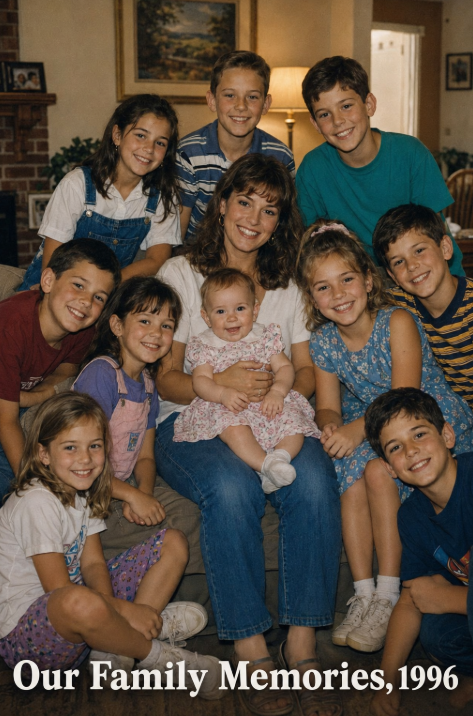
Over the next few months, that single interaction blossomed into a life I never could have planned. I fell in love with Robert, yes, but I fell even harder for the chaotic, beautiful, and demanding world he inhabited. Raising ten children—from the mature 15-year-old Amanda to the whirlwind of the quadruplets—was an enormous task, but it was one I embraced with everything I had. Robert proposed over a modest dinner of meatloaf, and I said “yes” without a second thought, despite my mother’s constant, stinging reminders that I was “throwing my life away.”
But two weeks before the wedding, the air in the house grew heavy. Robert lost weight, complained of splitting headaches, and began wearing a mask of forced cheerfulness that didn’t quite reach his eyes.
Then came the morning I woke to a cold bed. The house was unnervingly silent. I found a note beneath the sugar bowl that contained nothing but a handful of cold, dismissive words: “I’m sorry. I can’t do this anymore.” The betrayal was a physical blow, yet the pressure from my family was worse.
They insisted I was not their mother, that I was too young to be saddled with ten orphans, and that I should let the system take them. But when I looked at those ten faces, I saw my own. I signed the papers, becoming their legal guardian, and spent the next thirty years working warehouse shifts and sewing school uniforms, sacrificing my own dreams to ensure they lived theirs.
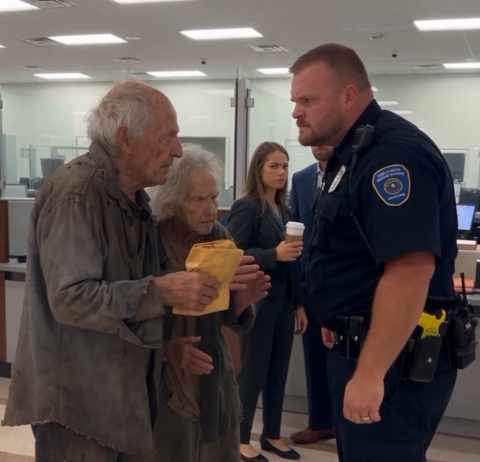
Thirty years later, my life was full of graduations, weddings, and grandchildren. The ache of Robert’s absence had dimmed into a background noise—until a man in a gray suit knocked on my door. He was Robert’s attorney, and he had come to deliver an envelope from the man who had vanished three decades ago. As I read the letter, the room seemed to tilt. Robert had been facing a terminal illness with no guarantee of survival.
He had left to spare me the agony of watching him die, believing his absence would hurt less than his funeral. But the treatment had worked. He had spent the decades watching us from the shadows, funding our lives through a modest business and ensuring we never struggled.
As I sat at the table with the ten grown adults I had raised, the anger I had harbored for decades finally dissolved into a quiet, profound understanding. He hadn’t left because he didn’t love us; he had left because he loved us too much to let us witness his end.