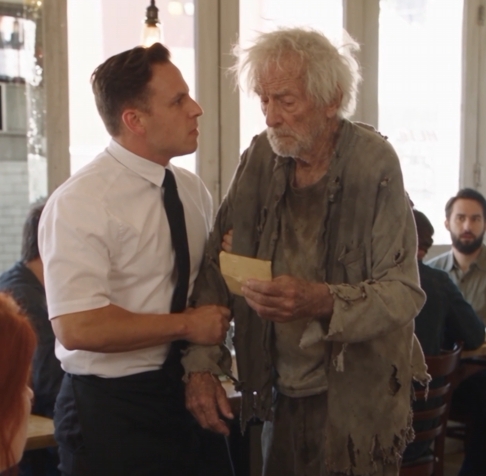
The Tuesday was gray and suffocating, the kind of day where the sky seems to press down on the city, and everyone scurries past each other with their heads buried in their collars. I was ducking into a local diner, my mind racing through the mundane checklist of my own stresses—bills, deadlines, the frantic pace of modern life—when I spotted him.
He was seated on the bench outside, huddled under a thin blanket, his shoulders rounded beneath a frayed, military-issue jacket that looked like it had seen far more storms than it should have.
Something about the weary stillness in his posture—a quiet, disciplined resignation—tugged at a part of me I usually keep tucked away. I didn’t calculate the cost or wonder if I was being intrusive; I just knew I couldn’t walk inside and ignore him.
I turned back, my boots splashing through the oil-slicked puddles, and asked a simple question that would define the rest of my year: “Would you like to come inside and have a warm meal?”
His reaction wasn’t what I expected. His eyes, rimmed with the deep fatigue of a lifetime of endurance, welled up with a shock that quickly dissolved into profound gratitude. Over steaming bowls of soup, the barriers of “stranger” and “service member” fell away.
He didn’t just tell me about the war; he told me about the silence that followed it. He spoke of the jarring transition from the intense camaraderie of the front lines to the profound, aching loneliness of returning to a country that often didn’t know how to welcome him back.
When we stepped back out into the cool, cleansed air, the rain had stopped, and the world felt fundamentally different. That meal was the catalyst for a total reconfiguration of my life. I realized that my own “problems” were ripples in a pond, while his had been tidal waves.
I’ve since devoted my weekends to a veteran transition center, not to “fix” anything, but simply to be a listener. I learned that we walk past hundreds of heroes every day, never realizing the weight they carry. By choosing to stop, I stopped being a spectator in my own life and started being an active, compassionate participant in my community. It was a small act of buying a lunch, but it bought me a brand-new soul.