What happens in the video:
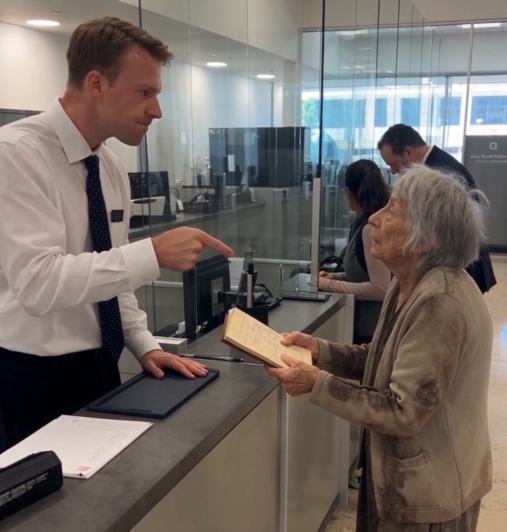
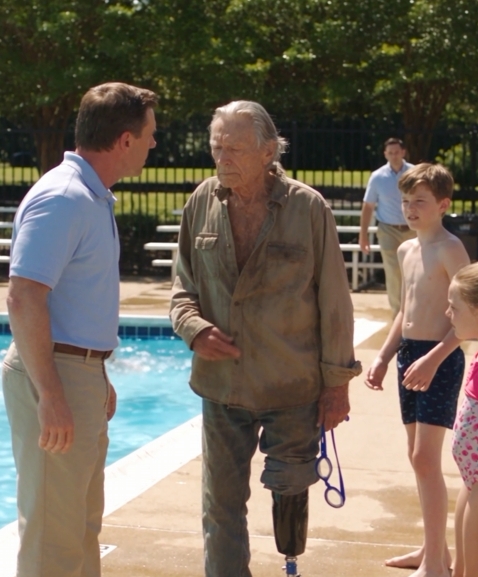
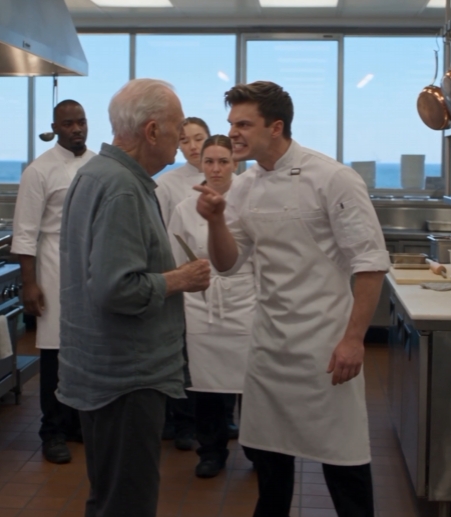
An older woman wearing a chef’s jacket holds a large brown folder during a tense conversation with a younger man in a professional kitchen. She opens it and shows him the pages. Later, an older man in a light suit enters and approaches her. The clip does not clearly reveal the folder’s contents or establish anyone’s role beyond their appearance.
Imagined story and continuation:
Beatrice held the folder against her chest while the young man explained how things worked in his kitchen.
“We have established procedures,” he said. “We can’t change everything because someone prefers the old way.”
“I haven’t asked you to change everything.”
“You brought an entire folder.”
“I was asked to.”
She opened it on the counter.
Inside were preparation schedules, staff notes and recipes collected during her years running a busy community kitchen. The restaurant’s owner had invited her to help develop a training programme for apprentices.
The young chef had assumed she was there for a trial shift. Beatrice had assumed he had been told about the meeting.
By the time the owner arrived, both were frustrated.
“I owe you an apology,” he told them. “I should have introduced you properly.”
He explained the project and asked the young chef, Ben, to stay. Ben folded his arms at first, but Beatrice turned to a page covered in handwritten corrections.
“This one might interest you.”
It described a service that had gone badly wrong: missing ingredients, late deliveries and a team too nervous to admit they were falling behind.
“How did you fix it?” Ben asked.
“We stopped pretending nobody had made a mistake.”
He gave a reluctant smile.
Over the next hour, they discovered that their methods differed less than their vocabulary. Ben used digital schedules. Beatrice used paper charts. Both cared about getting food out consistently without exhausting the staff.
She asked him to demonstrate his ordering system. He asked why she paired new cooks with different mentors throughout their first month.
“So they learn more than one person’s habits,” she explained.
Ben looked down at the folder.
“I was rude.”
“Yes,” Beatrice said. “But we can still have a useful afternoon.”
They agreed to build the programme together. Ben would handle the digital materials; Beatrice would help structure the practical lessons.
On the first training day, an apprentice overcooked a tray and stood frozen beside the oven.
Ben started towards him, ready to deliver a sharp correction. Then he glanced at Beatrice.
He took a breath.
“Tell me what happened.”
The apprentice explained. Together, they worked out where the timing had gone wrong and adjusted the next batch.
At the end of the session, Beatrice closed her folder.
“That was well handled.”
Ben shrugged, pleased despite himself.
“I had a useful afternoon.”
Several months later, the training programme had a new folder beside it: one containing the apprentices’ own notes. Beatrice insisted that their mistakes and solutions belonged in the record too.