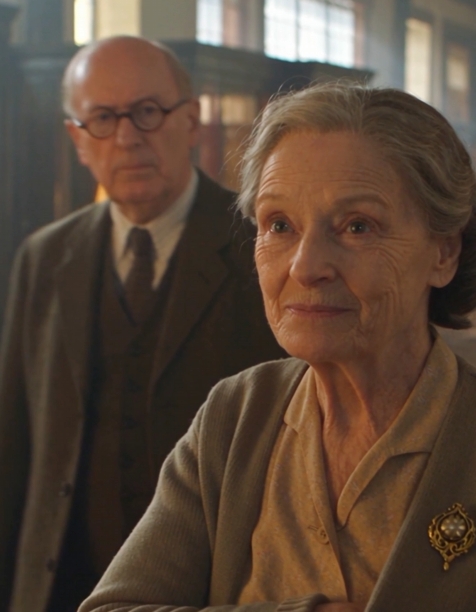
What happens in the video:
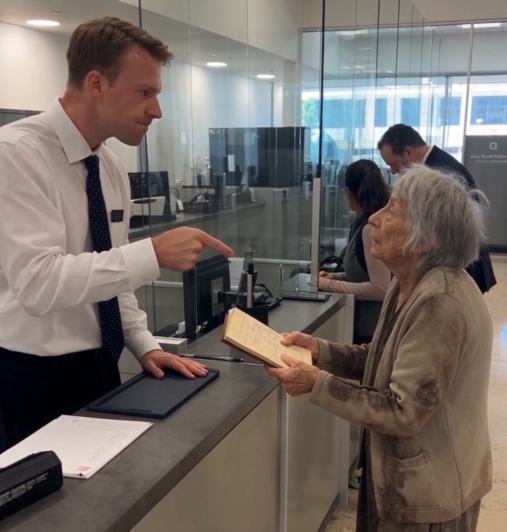
An elderly woman speaks beside a large sepia-toned photograph showing rows of people in a factory-like interior. A younger man listens, initially with a subdued or sceptical expression. An older man wearing glasses joins them, and the woman looks down at a small paper or photograph in her hands. The younger man appears surprised near the end.
Continuation:
Alice stopped in front of the photograph so abruptly that her grandson nearly walked into her.
“That’s the room,” she said.
He followed her gaze across the rows of workstations.
“The one you told me about?”
She nodded.
A young guide nearby overheard and began explaining the exhibition’s history. Alice listened politely until he mentioned the date.
“I think that photograph was taken earlier.”
The guide glanced at the label.
“Our records say otherwise.”
Alice moved closer without touching the display.
“The windows were changed after the winter storm. These are the old ones.”
The guide’s expression tightened. He had spent weeks preparing the tour and wasn’t sure how to respond to a visitor correcting him.
Then Alice took a small photograph from her handbag.
It showed several women outside the same building. On the back, names and a date were written in faded ink.
An older curator approached and asked to see it.
“Were you employed there?”
“From sixteen until I married. Then again when my husband became ill.”
The curator compared the photograph with the exhibition image. Alice pointed out a woman near the edge of the large picture.
“Elsie. She used to bring peppermint sweets and pretend they were medicine.”
Her grandson smiled. He had heard Elsie’s name many times but had never seen her face.
The guide looked again at the factory photograph. Until then, it had been a source to memorise: dates, production figures, working conditions.
Alice was describing people.
She remembered who sang while they worked, who secretly helped slower colleagues finish, and who collected money when someone’s child was ill.
The curator asked whether she would be willing to record those memories.
Alice hesitated.
“I’m not an expert.”
“You were there.”
A month later, she returned with a notebook full of names. Her grandson helped her organise the pages, occasionally discovering that a story he thought he knew had three more chapters.
The young guide met them at the entrance.
“I’ve corrected the date,” he said. “And I wanted to thank you.”
Alice nodded.
“Records get things wrong. So do memories. It helps to compare them.”
During the recording, she grew tired and stopped for tea. The guide sat with her and asked about Elsie.
That question kept them talking for another half hour.
When the exhibition reopened, visitors could hear Alice’s voice through headphones beside the photograph. Her grandson watched a child listen, then lean closer to find the woman with the peppermint sweets.
On the way home, he asked Alice whether she was pleased.
“Yes,” she said. “It’s nice to have them called by their names again.”