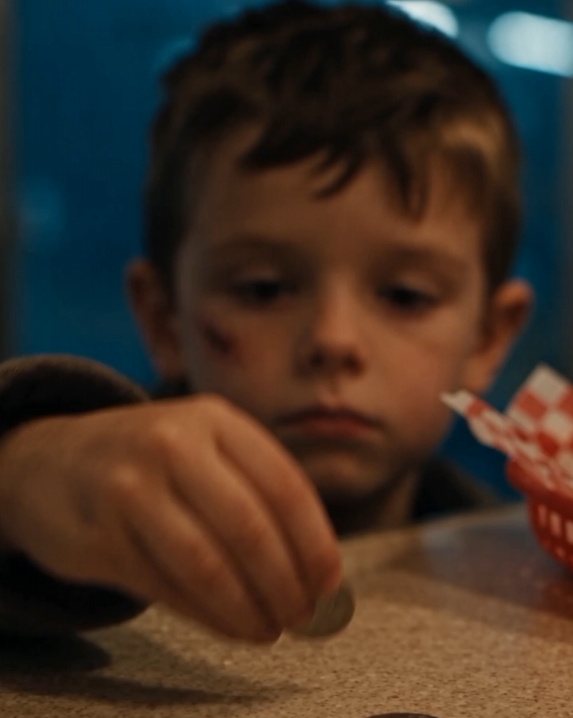
A young boy places coins on a diner counter while staff watch him. He looks outside into the rain, where someone is sitting beneath a shelter. An older customer inside gets up and approaches the counter. A waitress serves soup, and the boy opens the door for another older man coming in from the rain. The first elderly customer turns toward the newcomer with a startled expression. The clip ends before explaining their connection.
What happens next:
Oliver had counted those coins three times. They were enough for something small, but when he saw the man shivering outside, his own hunger suddenly felt less urgent.
“Could he have soup instead?” he asked.
The waitress reached for a bowl. An elderly customer nearby quietly placed a note beside Oliver’s coins.
Then the door opened.
The customer’s hand froze halfway to his coffee.
“Frank?”
The rain-soaked man stopped on the mat. For a moment, neither moved.
Thirty years earlier, Frank had pulled him from an overturned delivery truck. They had worked together afterward, shared lunches, attended each other’s weddings. Then the factory closed, Frank moved away, and eventually even the Christmas cards stopped.
“I tried your old number,” the customer said.
Frank looked down. “A lot changed.”
There was more to that sentence than either man could explain in a doorway.
The customer pulled out the chair opposite his own.
“Then sit down. Tell me.”
Over soup, Frank admitted that his wife had died and he had lost his rented room. He had been too ashamed to contact anyone who remembered him differently.
His old friend listened without interrupting.
That night, he helped Frank arrange somewhere warm to stay. The next morning, they returned to the diner together.
Oliver was there before school.
“Did you two know each other?” he asked.
The customer smiled.
“Yes. But we needed someone to open the door.”