My four-year-old daughter was standing outside the glass doors of a hotel ballroom in her socks when I found her. Inside, two hundred guests were applauding my husband for being such a devoted family man.
Lucy had one hand pressed against the glass.
In the other, she held the little blue hearing aid she was supposed to be wearing.
“Mommy,” she said when she saw me. “I tried being quiet.”
I dropped to my knees.
Her cheeks were wet. One shoe lay beneath a chair several feet away. The other was missing.
“Why are you out here?”
She glanced through the doors.
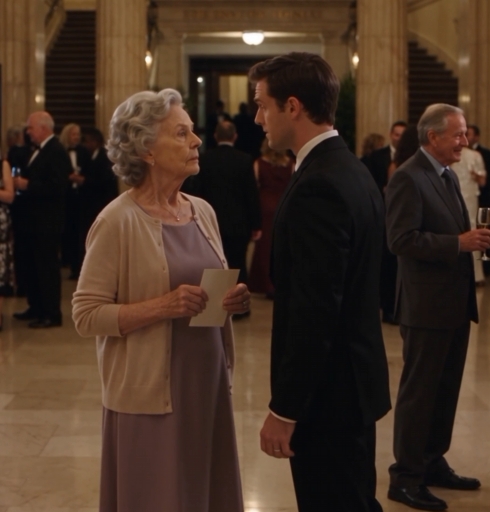
At the far end of the ballroom, my husband, Daniel, stood beside his mother beneath an enormous banner celebrating the twentieth anniversary of the family construction company.
His arm was around her shoulders.
Both of them were smiling.
“Grandma said I was spoiling Daddy’s speech.”
I looked at the hearing aid in Lucy’s palm.
“Why did you take that out?”
Her fingers closed around it.
“Daddy said I could have it back when I was ready to listen.”
For a moment, I couldn’t move.
Then the applause grew louder.
Earlier that evening, Daniel had fastened Lucy’s silver shoes himself.
She sat on the edge of our bed while he crouched in front of her, making an elaborate performance of checking each buckle.
“There,” he said. “Ready to be my special guest?”
Lucy nodded so hard her curls bounced.
She had been looking forward to the party all week.
We had practiced what she would say when people spoke to her.
We had explained that the room might be loud, that she could ask for a break, that she didn’t have to hug anyone.
Lucy had been using hearing aids for eleven months.
She was still learning how to manage crowded rooms.
Sometimes she spoke too loudly. Sometimes she missed a question and answered the one she thought she had heard.
Daniel knew all of this.
He had sat beside me at appointments.
He had watched me kneel so Lucy could see my face when I spoke.
He knew that if she struggled to understand, getting angry only frightened her.
That evening, he had kissed the top of her head.
“I want my girls right up front.”
I remembered that sentence as I knelt in the corridor.
I want my girls right up front.
I had left the ballroom for less than fifteen minutes.
My younger sister was watching our house that weekend, and she had called because water was dripping through the kitchen ceiling.
I stepped into the lobby, talked her through finding the shutoff valve, and sent her the plumber’s number.
Before leaving, I touched Daniel’s arm.
“Can you keep Lucy with you?”
He looked offended.
“You don’t have to ask me to watch my own child.”
So I hadn’t asked twice.
Now I took Lucy’s hearing aid from her damp hand.
“Did Daddy take this out?”
She nodded.
“Then Grandma gave it back.”
“Did anyone stay here with you?”
Her eyes filled again.
“Grandma said I could come in when the clapping stopped.”
The ballroom erupted in another round of applause.
Lucy flinched.
I gathered her into my arms.
She was getting too big to carry comfortably, but that night she folded against me like a much younger child.
Behind us, someone said, “Is she all right?”
A woman wearing a hotel badge stood beside a service door.
She held Lucy’s missing shoe.
“I found this near the stairs,” she said.
Then she looked at my daughter’s face, and her expression changed.
“I’ll get a chair.”
“Could you get my coat instead? It’s at table six. Dark green.”
“Of course.”
She hesitated.
“Would you like me to bring someone?”
I looked through the glass.
Daniel was accepting a framed award.
“No,” I said. “Just the coat.”
We were almost at the lifts when Daniel caught up.
His mother, Evelyn, followed a few paces behind him.
“Where are you going?” he asked.
“Home.”
“You missed the presentation.”
I adjusted Lucy on my hip.
“She was outside alone.”
His eyes moved to our daughter.
“Lucy, what did Grandma tell you?”
I stepped back.
“Speak to me.”
Evelyn sighed.
“Oh, honestly. I was watching her through the door.”
“You were on the stage.”
“For a few minutes.”
Lucy pressed her face harder into my shoulder.
Daniel lowered his voice.
“She was shouting during the speech, Anna.”
“She was trying to hear you.”
“She could hear perfectly well.”
I opened my hand.
The hearing aid lay against my palm.
His face tightened.
Around us, guests were drifting toward the toilets and the bar. A man in a dinner jacket slowed down, recognized Daniel, and thought better of greeting him.
“I took it out because it was squealing,” Daniel said.
That was possible. Hearing aids sometimes fed back.
But Lucy’s words were still in my ears.
Daddy said I could have it back when I was ready to listen.
“Then why didn’t you bring her to me?”
“You were on the phone.”
“You could have called.”
Evelyn stepped closer.
“This evening means a great deal to him.”
I looked at her.
“Where are Lucy’s shoes?”
“What?”
“Why was she outside without her shoes?”
Evelyn glanced at Daniel.
“She was making a fuss.”
The lift arrived with a soft chime.
I got in.
Daniel put his hand against the door.
“We need to deal with this together.”
“Move your hand.”
“Anna.”
Lucy began to cry.
He looked down at her, then at the people watching us.
He moved.
My sister was waiting at our house with towels piled on the kitchen floor and the water turned off.
She took one look at us and set down the mop.
“What happened?”
“I need you to stay.”
“Okay.”
No questions first.
No request to hear the other side.
Just okay.
While she made tea, I helped Lucy out of her party dress.
There was a small tear in one stocking. Her heel was red where she had stepped on something.
“Did you go near the stairs?” I asked.
“I was looking for you.”
I sat on the floor beside her bed.
She picked at the seam of her blanket.
“Daddy was talking into the stick.”
“The microphone?”
She nodded.
“And everybody laughed, but I didn’t know why.”
“What did you do?”
“I asked.”
“What did Daddy say?”
“He said shh.”
She demonstrated, pressing a finger against her lips.
“Then I asked again.”
I waited.
“He came down and took my ear out.”
That was what she called it sometimes.
My ear.
I kept my face still.
“What happened after that?”
“Grandma walked me outside.”
“Did she tell you to stay there?”
Lucy nodded.
Then she asked the question I would remember long after most of that evening had blurred.
“Do I have to say sorry before Daddy comes home?”
I pulled back her blanket.
“You don’t have to fix anything tonight.”
“Is he mad?”
“I’m here,” I said. “And Aunt Sophie is here. We’re going to help you get some sleep.”
She wanted the bedside lamp left on.
I left the hallway light on too.
Daniel came home after midnight.
By then, my sister had gone downstairs to wait for him.
I heard their voices from the landing.
“Where’s Anna?”
“With Lucy.”
“This is between me and my wife.”
“Then lower your voice so your daughter can sleep.”
He went quiet.
A few minutes later, I met him in the kitchen.
He had removed his tie. There was a little gold company pin on his lapel.
For some reason, I couldn’t stop looking at it.
“Let me explain,” he said.
I sat down.
He remained standing.
“The microphone was picking up interference from her hearing aid.”
“Was it?”
“Yes.”
“Which one?”
He frowned.
“What?”
“She wears two. Which one was causing it?”
“The blue one. The one you had.”
“They’re both blue.”
He pulled out the chair opposite me.
“I don’t remember every detail.”
“You remember enough to say it was equipment trouble.”
He rubbed his forehead.
“She was getting worked up. I thought taking one out would settle her.”
“By making it harder for her to hear?”
“That isn’t what I meant.”
“Then tell me what you meant.”
He looked toward the window.
For a long time, the only sound was water ticking into a bucket beneath the damaged ceiling.
Eventually he said, “I needed five minutes when everything wasn’t about what Lucy needed.”
I had expected another excuse.
The truth was worse.
The next morning, Evelyn called.
I let it go to voicemail.
Her message lasted nearly three minutes.
She talked about Daniel’s pressure at work. About everything the family had done for us. About how upset he had been when I left.
Near the end, she said, “You cannot raise a child to think every discomfort is an emergency.”
I saved the message.
Then I called the hotel.
I asked whether anyone had seen Lucy in the corridor.
The duty manager listened without interrupting.
When I finished, she said, “I believe our events supervisor spoke to your husband about that.”
I sat upright.
“About what?”
“Your daughter being unattended.”
“What did he say?”
There was a pause.
“I wasn’t present. Let me ask her to contact you.”
The events supervisor called an hour later.
Her name was Rosa.
She was the woman who had found the shoe.
“I saw your daughter outside the ballroom shortly before you arrived,” she told me. “I asked her who she was with, but she was upset and I couldn’t understand everything she said.”
My hand tightened around the phone.
“Did you speak to Daniel?”
“Yes. I recognized him from the event briefing.”
“What did you tell him?”
“That his daughter was alone in the corridor.”
“And?”
Rosa was quiet for a moment.
“He said his mother had put her there to calm down.”
I stared at the kitchen table.
“Did he come out?”
“No.”
“What did you do?”
“I went back to sit with her. Then a guest fell near the service entrance. I called another member of staff to stay with your daughter, but by the time she arrived, you were there.”
Rosa took a breath.
“I’m sorry there was a gap.”
I pressed my fingers against my eyes.
A stranger had noticed.
A stranger had gone to get her father.
And her father had decided his daughter could keep waiting.
Daniel denied it.
Not all of it.
Only the part he couldn’t explain.
“She never said Lucy was alone.”
“She says she did.”
“Then she’s remembering it wrong.”
I was standing in our bedroom, putting clothes into a suitcase.
Lucy and I would stay with my sister while the ceiling was repaired.
I had not told Daniel how long we would stay after that.
“You’re really leaving over this?”
I folded a pair of jeans.
“Look at me, Anna.”
I did.
“I made one bad decision.”
“Rosa gave you a chance to make another.”
He stopped talking.
I placed the jeans in the case.
Then he said, very quietly, “You’ve already decided what kind of person I am.”
I wanted to tell him that I had spent the night trying not to.
Instead, I zipped the bag.
The video arrived three days later.
It came from Daniel’s cousin, Beth.
Her message said:
I was recording the speeches for my dad because he couldn’t attend. I think you should have this.
I watched it while Lucy was at preschool.
The first few minutes showed Daniel thanking clients and employees.
Then the camera shifted toward our table.
Lucy stood beside her chair, trying to get his attention.
“Daddy, what did you say?”
A few guests smiled.
Daniel gave a small laugh into the microphone.
“Someone’s determined to have her own speech tonight.”
More laughter.
Lucy smiled too.
She thought she had done something funny.
Then she asked again.
“Daddy, what did you say?”
His expression changed.
He handed the microphone to his brother and walked toward her.
The recording couldn’t catch his words clearly.
It didn’t need to.
I watched him crouch.
Watched Lucy lean toward him, expecting help.
Watched his hand move to her ear.
She reached after it immediately.
He caught her wrist, lowered her hand, and stood.
There was no squeal on the recording before he removed the hearing aid.
No equipment failure.
Just a little girl asking a question twice.
Evelyn appeared beside the table.
She took Lucy by the hand and led her toward the doors.
Daniel went back to the stage.
Before he picked up the microphone, he placed something in his jacket pocket.
I replayed that part once.
Then I closed the video.
I didn’t need to watch my daughter reach for it again.
Beth called that afternoon.
“I should have said something,” she told me.
“Why didn’t you?”
“I thought Evelyn was taking her to you.”
That answer made sense.
It was what I might have assumed, watching from across a crowded room.
Then Beth said, “There’s another thing.”
I waited.
“Daniel asked me not to post that section.”
“When?”
“The next morning.”
“Did he say why?”
“He said the family stuff distracted from the company.”
I looked across Sophie’s kitchen.
Lucy’s drawing was pinned to the refrigerator.
Three people stood beneath a yellow sun.
Lucy, me, and her father.
She had drawn blue circles beside her own face.
I had spent months helping her feel comfortable wearing her hearing aids. Letting her choose stickers for the case. Reading books with children who wore them. Answering questions without embarrassment.
Daniel had watched all of that.
Then, in a room full of people, he had put one in his pocket.
When we met to talk, Sophie stayed with Lucy.
Daniel arrived at the café carrying flowers.
He set them on the table between us.
I moved them to the empty chair so I could see him.
“I saw Beth’s video,” I said.
He closed his eyes.
“Of course she sent it.”
“She was recording your speech.”
“She didn’t need to get involved.”
“She didn’t cause what happened.”
The waitress came over.
We ordered coffee neither of us touched.
After she left, Daniel said, “I was embarrassed.”
“By Lucy?”
“By the interruption.”
“She asked what you said.”
“Everyone was looking at me.”
“Yes,” I said. “They were.”
He stared at his cup.
For the first time, he didn’t mention the microphone.
He didn’t mention exhaustion or his mother or my phone call.
“I wanted her to stop,” he said.
“So you took away something she needed.”
He nodded.
I had wanted him to admit it.
I thought hearing him say it might ease something.
Instead, it made the room feel very small.
“Can we come back from this?” he asked.
“I don’t know.”
“What am I supposed to do with that?”
I thought of Lucy outside the ballroom, holding her hearing aid and waiting for permission to come in.
“You’ll have to live with not knowing for a while.”
The months afterward were slower than stories like this usually make them sound.
There were appointments.
Difficult conversations.
Forms I filled out at my sister’s kitchen table after Lucy went to sleep.
I spoke to a lawyer. Daniel and I separated. We worked through arrangements for him to see Lucy in circumstances I felt comfortable with while the professionals involved helped us decide what should come next.
He began counseling.
Eventually, he stopped asking me when things would go back to normal.
Evelyn took longer to understand that I would not leave Lucy in her care.
For a while, she sent presents instead of apologies.
A dollhouse.
A winter coat.
A bracelet much too large for a four-year-old wrist.
I returned the bracelet.
Lucy needed adults who would listen to her. She had enough things.
At bedtime, she continued asking whether people were angry.
If she spilled milk, she asked.
If she interrupted a conversation, she asked.
Once, when her hearing aid battery died at breakfast, she began crying before I could reach the spare.
“I didn’t do it,” she said.
I sat beside her until she let me change it.
Then we ate cold toast together.
About six months after the party, Daniel apologized to Lucy in front of me.
He had practiced with his counselor, he told me beforehand.
I said I hoped that meant he had practiced telling the truth.
He sat on the rug while Lucy built a tower.
“At the hotel, I took out your hearing aid because I was upset,” he said. “That was wrong.”
Lucy kept stacking blocks.
“You needed it to hear. I should have helped you.”
She picked out a yellow block.
“Grandma put me outside.”
“I know.”
“You didn’t come.”
His face crumpled.
“No,” he said. “I didn’t.”
She finally looked at him.
“Mommy came.”
He glanced at me.
Then back at her.
“Yes. She did.”
Lucy returned to her tower.
She wasn’t ready to comfort him.
For once, nobody asked her to.
A year later, Lucy stood on a small stage at her school concert wearing cardboard stars in her hair.
I sat near the front.
Daniel sat several chairs away.
We were no longer married.
During the second song, the backing music stopped unexpectedly.
Some children kept singing. Others went quiet.
Lucy looked toward her teacher.
“I didn’t hear where we are,” she said, loudly enough for the room to hear.
Nobody laughed.
Her teacher stepped closer and showed her the place on the lyric sheet.
“We’ll start that verse again.”
Lucy nodded.
The pianist found the chord.
And my daughter sang.
Afterward, she ran toward me with one cardboard star hanging over her eyebrow.
“Did you hear me?”
“I did.”
“All of it?”
“All of it.”
She slipped her hand into mine.
As we walked toward the exit, she stopped to straighten her hearing aid. Then she pushed open the door and went through, certain I was coming with her.