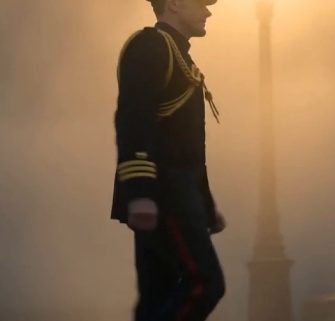
The fog off the bay was so thick the streetlamps looked like yellow balloons floating in the gray air.
Marcus walked with his chin buried in his coat, his eyes tracking the yellow line on the curb as he made his way toward the ferry terminal.
His shift at the customs office started at midnight, and he had already lost his umbrella to a gust of wind on 2nd Street.
Huddled against the stone base of the old harbor light was a woman known along the docks as Queenie.
She had three different wool shawls pinned across her chest with a safety pin, and her feet were wrapped in layers of dry burlap secured with green garden twine.
As Marcus passed, a sudden squall blew his uniform cap off his head.
It rolled across the wet stones, stopping right in the puddle where Queenie was washing a copper coin with an old toothbrush.
“You’re losing your cover, officer,” she said, her voice deep and slow, like water moving through an old wooden pipe.
She picked up the cap by the brim, shaking the water from the gold braid before handing it back.
“Thanks,” Marcus said, his voice tight from the cold. He reached into his pocket for a dollar, but his fingers found nothing but loose lint.
“I’m out of cash tonight, Queenie. I’ll catch you on the flip side tomorrow.”
“The flip side is three days away, Marcus,” she said, squinting through the fog toward the dark harbor mouth.
“The pilot boat from the outer bar just ran aground on the mud flats. There won’t be any ferries crossing tonight.
The harbor master’s about to blow the three-blast whistle.”
Marcus paused, his cap halfway to his head. “The pilot boat? They have radar, Queenie.
They don’t hit the flats in a standard fog.”
“The radar doesn’t see the sand when the tide drops two feet lower than the chart says,” she said, dipping her toothbrush back into a small plastic jar of river water.
“The moon’s at perigee tonight, boy. The water’s running out of the bay like a tipped bucket.
If you get on that boat, you’ll spend the night stuck in the channel with forty tons of raw coal.”
Marcus looked out into the gray soup.
A second later, three long, mournful notes from a steam whistle echoed across the water from the coast guard pier—the signal for a harbor closure.
“How long have you been tracking the tide, Queenie?” Marcus asked, stepping into the lee of the stone tower.
“Since before they built the bridge,” she said, her fingers turning the copper coin over in her hand.
“People think the dirt stays where you put it, Marcus. But the water knows better.
It’s always moving the floor around when nobody’s looking.”