In the cutthroat world of global consumer packaged goods, profit margins are secured by capturing fractions of a single cent across millions of mass-produced units. For industrial dairy processors, who blow-mold plastic jugs directly inside their facilities before immediately filling them with liquid, the engineering of a container is a precise balancing act between material costs and durability.
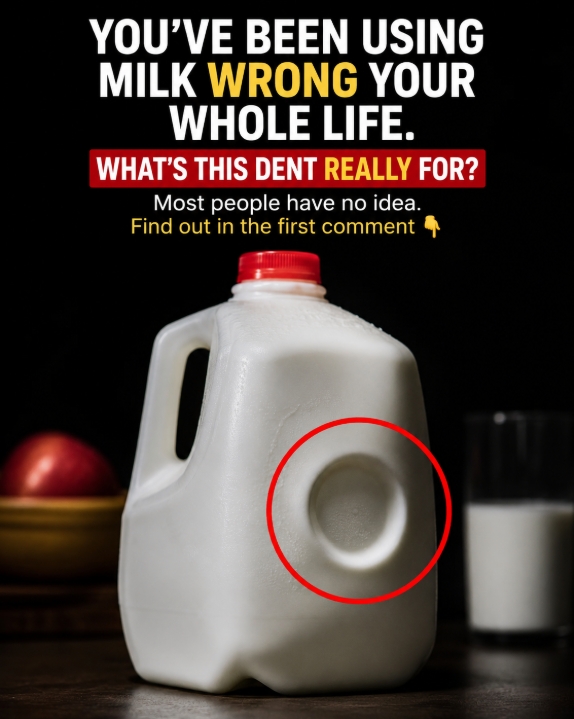
If you look closely at any plastic milk container, you will notice a distinct, inverted circular or oval divot pressed directly into the side wall. To the average consumer, this looks like a random stylistic flair or perhaps a grip for pouring. In reality, that small indentation represents a highly sophisticated manufacturing strategy patented in the late 1990s to solve a multi-million-dollar structural dilemma.
The primary objective of any packaging engineer is to use as little plastic resin as possible per container, as shaving off even a fraction of a millimeter of wall thickness saves enormous sums of money on an industrial production scale.
However, when plastic walls are made incredibly thin, they become structurally unstable, causing the container to sag, balloon, or buckle under the heavy weight of a liquid payload. To combat this issue, designers introduced the circular dent.
By stamping a three-dimensional geometric shape into the flat side panel, they drastically increased the rigidity and structural stability of the sidewalls, allowing the jug to maintain an upright, premium appearance on retail shelves without requiring thick, expensive plastic layers.
Furthermore, this humble indentation serves as an indispensable volume control mechanism. The physical structure of a plastic jug is highly volatile, naturally shrinking or expanding depending on changes in ambient temperature and seasonal humidity.
If a jug shrinks too much during the hot summer months, the required volume of milk would overflow during the automated filling process; if the container stays too large, it will look half-empty to consumers, dissuading them from purchasing.
By adjusting the precise depth and scale of the interchangeable circle inserts in the base molds, manufacturers can perfectly regulate the fill level of the container. This brilliant flexibility ensures that the liquid always appears filled to the absolute brim, securing consumer trust while protecting the dairy plant’s bottom line.